Women
Strength training for women.
Lifting will not make you bulky. It will make everyday life easier, and it is never too late to start.

In short
What is the best way to start strength training for women?
Start with two or three full-body sessions a week built around squats, hinges, pushes, pulls and carries, at a weight that leaves a couple of reps in reserve. Learn the form first, add weight gradually and eat enough protein. At any age, lifting builds strength and shape without making you bulky.
Can women lift weights safely?
Yes. Strength training for women is the same training anyone does, scaled to the person, and it is no riskier. Women can squat, deadlift, press and row safely when the weight suits them and the form is coached. Asking whether women can lift weights is really the same question as asking whether anyone can: start light, learn the movement and progress gradually.
Plenty of women in Lahore grew up hearing that weights were for men and that women should stick to walking or aerobics. Both are good for you, but on their own they leave out the kind of training that most directly builds strength, and strength is what keeps everyday life easy as the years go on.
Will lifting weights make me bulky?
No, and it is the worry heard most often. Building large, bulky muscle takes years of very specific training and eating, and women typically build muscle more slowly than men in any case. What usually happens instead is that you look firmer, clothes fit differently, and you feel noticeably stronger long before the scale moves much.
If your goal is a leaner shape, strength training is one of your best tools, alongside sensible eating. Muscle is what gives the body its shape once some fat is lost.
Why does strength training matter for women?
The benefits go well beyond appearance:
- Everyday strength. Lifting a child, carrying the shopping upstairs, moving furniture before a dawat without waiting for help.
- Bones. Load-bearing exercise helps maintain bone strength, which matters more with every decade, especially around and after menopause.
- Posture and back. Strong back and hip muscles help with the aches that come from long hours at a desk, or on your feet.
- Confidence. Watching the numbers in your notebook climb has a way of making you feel more capable everywhere else.
- Energy. Regular training tends to improve sleep and day-to-day energy.
Being strong means you can carry the shopping and the children, and keep doing it for the next forty years with ease.
How should a woman start strength training?
The same way anyone should: a few basic movements, done well, two or three times a week. A simple starting session might include:
- Goblet squat, holding a dumbbell or kettlebell at your chest.
- Romanian deadlift with dumbbells, to learn to lift from the hips rather than the lower back.
- Dumbbell row, for the upper back.
- Incline press-up, hands on a bench, to build pushing strength.
- Farmer’s carry, walking tall with a dumbbell in each hand.
Do two or three sets of each, at a weight you could lift a couple more times with good form. When the last set feels comfortable two sessions in a row, add a little weight. Write it all down.
Begin each session with five to ten minutes of easy cardio and some mobility for the hips and shoulders, then a light set of your first exercise. Finish with a few minutes of gentle stretching. The whole session need not take more than an hour. Our guide to your first day at the gym covers what to bring and what to expect.
Does your cycle, pregnancy or menopause change anything?
Each can change how training feels, and none of them automatically rules it out. Energy and strength can vary across the menstrual cycle, and it is fine to go lighter on days you feel flat. During pregnancy and after giving birth, speak to your doctor first and train only with a coach who knows; the plan changes considerably. Around menopause, strength training is widely encouraged for bones and muscle, but check with your doctor if you have any condition.
Where can women train in Lahore?
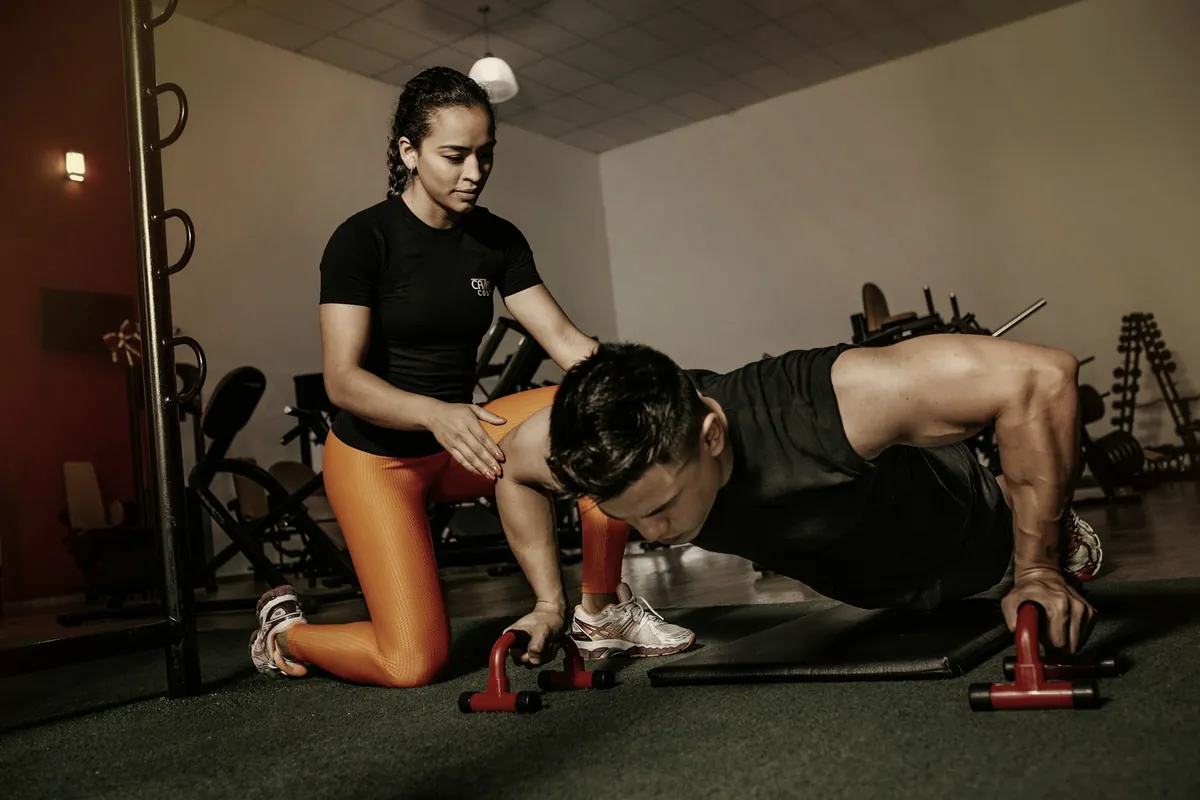
For many women, where they train matters as much as what they do. If you are looking for a ladies gym in Lahore, Structure has women-only floors at Johar Town and DHA, so you can train on a women-only floor without an audience. At Gulberg the training floor is mixed.
Working with a woman coach can help too, especially at the start. Structure’s female coaches include Areeba Javed at Gulberg, and Nazish and Halima Mahvish at Johar Town, whose coaching covers strength and conditioning, power yoga and step aerobics on the female floor. If you want a female personal trainer in Lahore, say so when you book.
What should you wear and bring?
Wear whatever lets you move freely and feel comfortable: loose or fitted, modest or not, it makes no difference to the training. Flat, clean shoes are better than very soft running shoes for lifting. Bring water, a small towel and a notebook. If you cover your hair, a sports hijab stays in place far better than a loose scarf when you are moving.
How quickly will you see results?
Most beginners feel stronger within a few weeks, largely because the body gets better at the movements. A visible change in shape usually takes a few months of steady training and sensible eating. The women who change the most are usually the ones who keep turning up, and that counts for more than training hard at the start. Our guide to how many days a week to train can help you set a pace you will keep.
What does it take to get started?
One visit is enough. At a free first visit, a coach talks through your goals and history, does a body assessment and gives you a starting plan to keep, whether or not you join. Mention anything they should know, from an old injury to a wedding you are training for. You do not need to be fit; most members start as beginners.