Recovery
Recovery that works.
Recovery after a workout happens between sessions, and your everyday habits decide how much of the training you keep.

In short
How do you recover after a workout?
Recovery after a workout comes mostly from ordinary habits: a full night’s sleep, a proper meal with protein within a few hours, light walking or swimming on the days between, a day before training the same muscles hard again, a few minutes of mobility, and an easier week every month or two.
Recovery is the part of training that happens when you are not training. A session puts your body under stress; the hours and days afterwards are when it repairs and adapts, and comes back a little stronger. Get that part wrong and you stall, ache and eventually stop. These eight habits cost little or nothing, and they matter more than any gadget.
1. Protect your sleep
Sleep is where most of the repair work is done, and nothing else replaces it. Short or broken sleep makes sessions feel heavier, makes you hungrier, and leaves you sore for longer. If you only fix one recovery habit, fix this one.
How to do it: keep a regular bedtime and wake time, even at weekends where you can. Eat dinner a little earlier when possible, keep the room dark and cool, and put the phone away before bed. Late-night dawats and match nights will happen; just do not let them become every night, because good sleep and training go together.
2. Walk on the days you do not train
Light movement helps you recover faster than lying still. A walk gets blood moving through tired muscles, loosens stiff joints after a desk day, and keeps the habit of moving alive between sessions.
How to do it: a twenty to forty-minute walk at a pace where you can still talk. In summer, go early in the morning or after sunset, or walk indoors. An evening walk after dinner is one of the simplest muscle recovery tips there is, and one of the easiest to keep.
3. Eat a proper meal after you train
Your muscles need protein and carbohydrate to rebuild and refuel. A proper meal within a few hours of training does most of the job; you do not need a shake in the changing room.
How to do it: plan your post-training meal before you leave home. Chicken tikka with roti and raita, eggs and a paratha cooked with less oil, or daal and rice with yoghurt all work well. We go into food in detail, with local dishes, in eating to train in Lahore.
Most of the strength a session builds arrives in the quiet hours after it.
4. Leave a day between hard sessions for the same muscles
Muscles that have been worked hard need time before they are worked hard again. Training them heavily on back-to-back days only leaves you doing worse sessions.
How to do it: alternate. Lower body one day, upper body the next, or a hard day followed by an easy one. If you train three days a week, Monday, Wednesday and Friday is a classic for good reason. For how to shape the whole week, see how many days a week to go to the gym, which covers rest days in more depth.
5. Plan an easier week every so often
Fatigue builds up without you noticing. Many coaches plan a lighter week, often called a deload, every four to eight weeks: the same exercises, but lighter or with fewer sets, so the body can catch up. People are often surprised to come back from one stronger.
How to do it: drop the weight or the number of sets for a week, keep the movement quality high, and resist the urge to test yourself. A busy week at work, a family wedding or the start of Ramadan is a natural moment for it. Your coach can build these into your plan so they arrive before you need them.
The same idea works on a smaller scale inside a normal week. Not every session has to be your hardest. Pairing one demanding day with a lighter one, or ending a session a set early when you feel flat, keeps you training well for months rather than burning out in weeks.
6. Spend ten minutes on mobility
Stiff hips, tight shoulders and a rounded upper back are what a desk job and a long commute leave behind, and they change how you squat, press and carry. A few minutes of mobility helps you move into good positions, which keeps training comfortable.
How to do it: ten minutes, most days: hip openers, a deep squat hold, thoracic rotations, and some shoulder work with a band. Do part of it as your warm-up and part of it in the evening, perhaps while the chai brews or during a television programme. Little and often works far better than one long stretch at the weekend, and it costs nothing. If something stays painful rather than stiff, ask a coach; our mobility and rehab training exists for exactly that.
7. Use the pool for easy movement
Water takes weight off your joints while you move, which makes an easy swim one of the gentlest ways to recover. In a Lahore summer, it also feels far better than a walk in the heat.
How to do it: on a rest day, swim or walk in the water for twenty to thirty minutes at an easy, relaxed pace. If you are looking for a gym with a swimming pool in Lahore, our Gulberg club has a temperature-controlled pool, included in the Standard and Premium plans and available as an add-on on Basic, and swimming is one of our programmes.
8. Keep heat, cold and the tools in their place
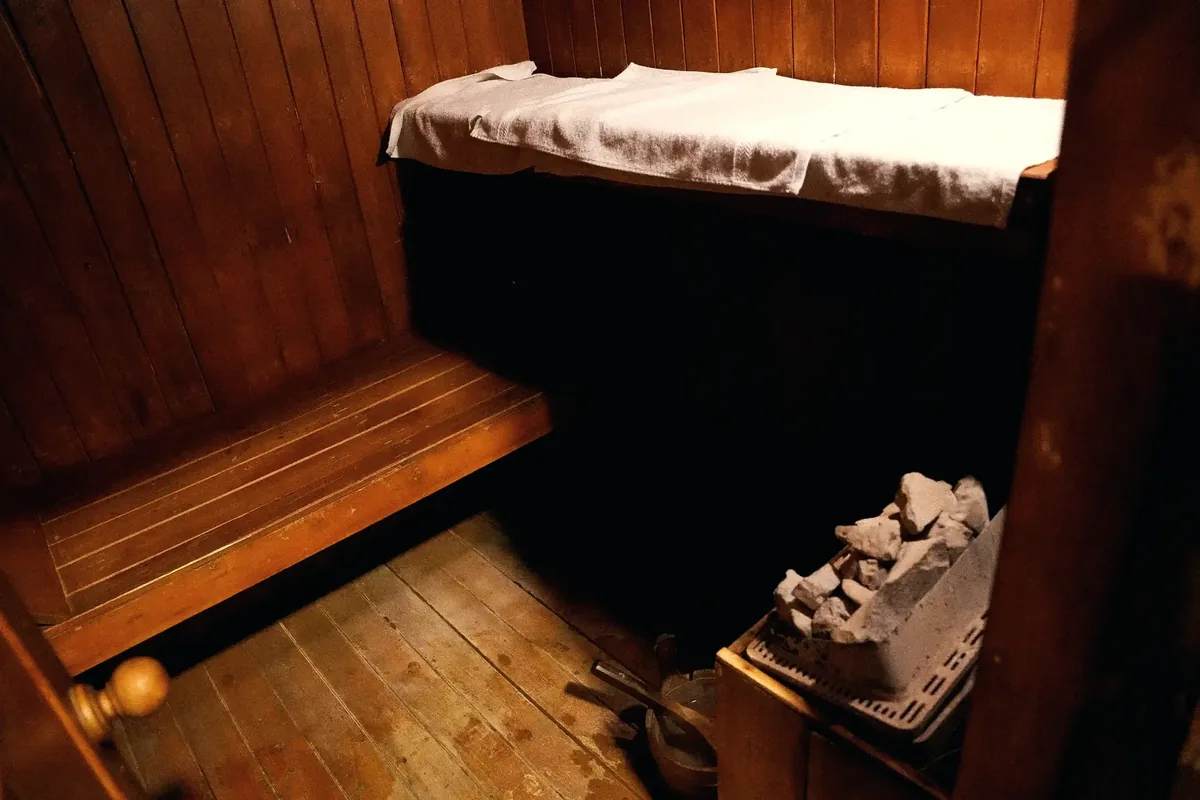
Sauna, jacuzzi, cold plunge and recovery tools can make you feel good and help you relax, and many people enjoy them. They work on top of the habits above, and no sauna makes up for four hours of sleep.
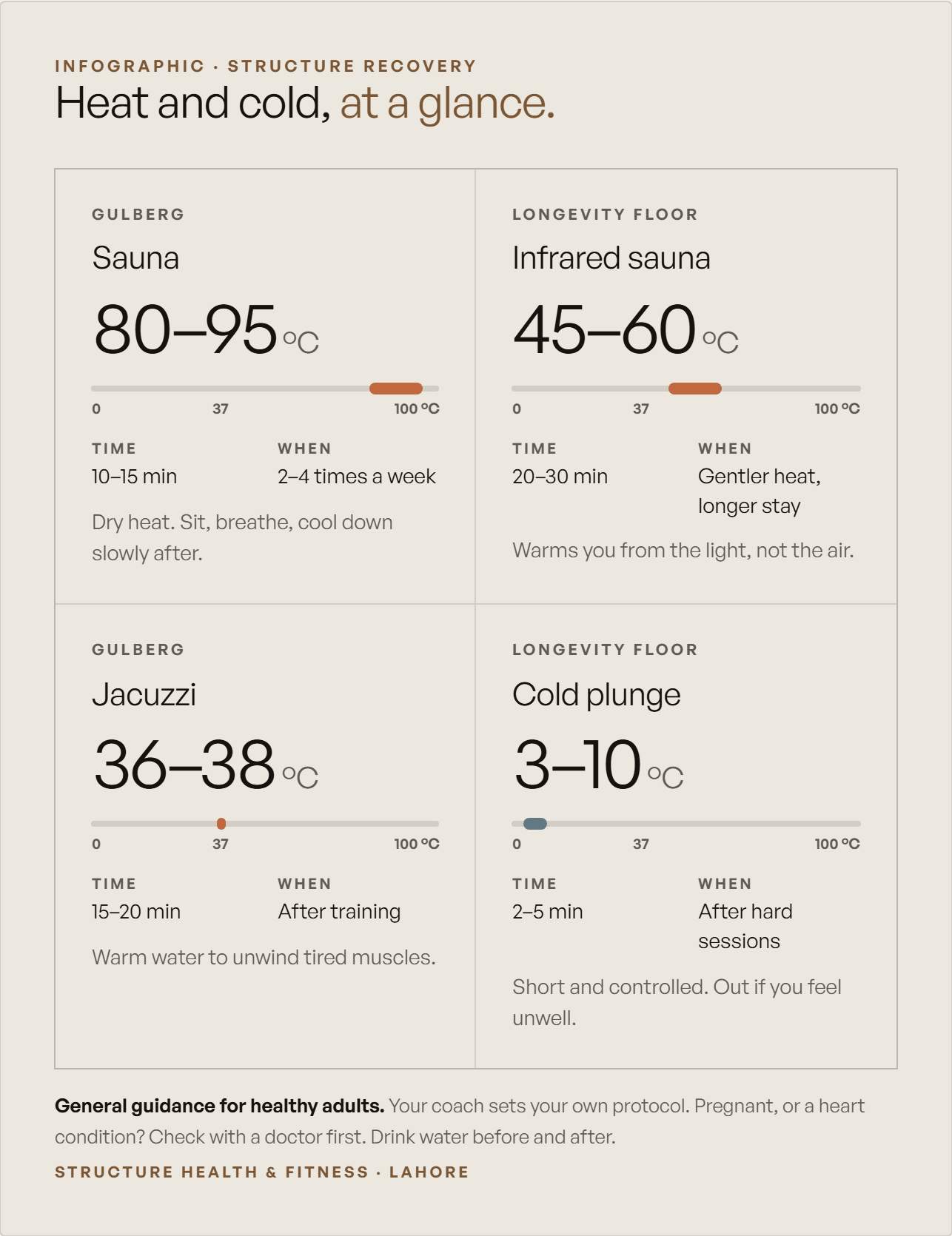
Infographic · Structure recovery
Heat and cold, at a glance.
Gulberg
Sauna
80–95°C
- Time
- 10–15 min
- When
- 2–4 times a week
Dry heat. Sit, breathe, cool down slowly after.
Longevity Floor
Infrared sauna
45–60°C
- Time
- 20–30 min
- When
- Gentler heat, longer stay
Warms you from the light, not the air.
Gulberg
Jacuzzi
36–38°C
- Time
- 15–20 min
- When
- After training
Warm water to unwind tired muscles.
Longevity Floor
Cold plunge
3–10°C
- Time
- 2–5 min
- When
- After hard sessions
Short and controlled. Out if you feel unwell.
General guidance for healthy adults. Your coach sets your own protocol. Pregnant, or a heart condition? Check with a doctor first. Drink water before and after. Structure Health & Fitness · Lahore
How to do it: get habits one to seven right first, then add the extras you enjoy. We cover heat in sauna after a workout and cold in our cold plunge guide. At Structure, the recovery facilities differ by club, and your coach can tell you what suits your training.
How do you know your recovery is working?
Watch for the simple signs. You should feel ready for most sessions, your lifts should creep up over weeks, and soreness should fade within a couple of days. If you feel flat for a week, sleep badly, or keep picking up niggles, recovery is behind, and the answer is usually more sleep and an easier week, not more training. Keep a short note of sleep and how each session felt alongside your weights.
Over a few weeks, those notes show patterns that memory misses: the late nights before poor sessions, the easier week that was followed by a personal best. They also give your coach something real to work with when your plan needs adjusting.
At Structure, recovery is one of the four steps in how we train: assess, plan, train and recover, then measure. If you would like a plan that includes it from the start, book a free first visit at any of our clubs. A coach will assess how you move and give you a starting plan you keep, whether or not you join.