Training
Back pain from the desk.
Your questions about sitting all day, a stiff back and whether the gym will help or hurt, answered plainly.

In short
What is the best exercise for back pain?
For everyday back pain from sitting, the best exercise is usually the one you can do regularly without a flare-up: daily walking, plus two or three short strength sessions a week for the hips, trunk and upper back. Sharp, spreading or worsening pain, numbness or weakness needs a doctor first.
I sit at a desk all day and my lower back aches. Is that normal?
Yes, it is very common, and in most cases it is not a sign that anything is damaged. Long office hours in one position, an evening crawl through Lahore traffic, then more sitting at home: the muscles around your hips and back stiffen, the ones that should support you do less and less, and by the end of the day your back lets you know. That kind of desk job back pain usually comes from how little you move.
The encouraging part is that it tends to respond well to exactly what a good gym routine provides: more movement, more strength and a little patience. The questions below are the ones people usually ask before they trust the gym with their back.
How do I know if my back pain needs a doctor first?
See a doctor before you start training, and promptly, if your back pain comes with any of the following:
- Numbness or tingling in the groin, buttocks or inner thighs, or new trouble controlling your bladder or bowels. This needs urgent attention.
- Weakness in a leg or foot, or pain, numbness or pins and needles travelling down a leg.
- Pain that started after a fall, an accident or a heavy blow.
- Fever, feeling generally unwell, or weight loss you cannot explain.
- Pain that keeps getting worse, or that does not ease at all with rest or a change of position, including at night.
If none of those apply and your pain comes and goes with sitting, standing and moving, it is the ordinary kind most desk workers know well. If you are ever unsure, the doctor comes first and the gym second. Keep any reports or advice you are given, so your coach can build around them.
Should I rest until it stops hurting?
Usually not. For everyday back pain, staying gently active tends to help more than lying down, and long spells in bed generally make stiffness worse. Keep it to a level your back tolerates, without pushing through sharp pain: a walk around the block, getting up from your desk often, and easy movements that leave you feeling better rather than worse.
A useful rule of thumb: a little discomfort while you move, which settles by the next morning, is acceptable. Pain that is sharp, spreads, or is worse the following day is a signal to change what you are doing.
Is my posture the problem?
Partly. There is no single perfect way to sit that protects your back all day. Sitting bolt upright for eight hours is as tiring as slumping for eight hours. The bigger problem is holding any one position for too long.
There is no perfect posture. The best posture is usually your next one.
So change position often: lean back, sit forward, stand for a phone call, walk to fetch water. Good posture correction builds the strength and mobility to sit, stand and lift comfortably in many positions.
What can I do at my desk during the working day?
Small habits, repeated daily, do more than one long stretch once a week:
A desk day
Move a little, often.
- ArriveA few hip and shoulder openers.
- Every half hour or soStand, walk to the water, roll the shoulders.
- LunchA ten-minute walk.
- AfternoonStand for calls, take the stairs.
- EveningTrain, or a walk after dinner.
Which exercises actually help back pain?
The best exercise for back pain is the one you can do regularly without a flare-up. For most desk workers, that means daily walking plus two or three short strength sessions a week for the hips, trunk and upper back. These are good places to start:
- Walking. The simplest back exercise there is. Walk most days, building up gradually.
- Glute bridge. Lie on your back with your knees bent and lift your hips by squeezing your glutes, not by arching your back. Lower slowly.
- Bird dog. On hands and knees, reach one arm forward and the opposite leg back, keeping your back still. Hold, return, switch sides.
- Dead bug. Lie on your back with your arms up and knees bent above your hips, then slowly lower the opposite arm and leg while your lower back stays gently on the floor.
- Side plank. From your knees at first. It strengthens the sides of your trunk, which work hard every time you carry a bag.
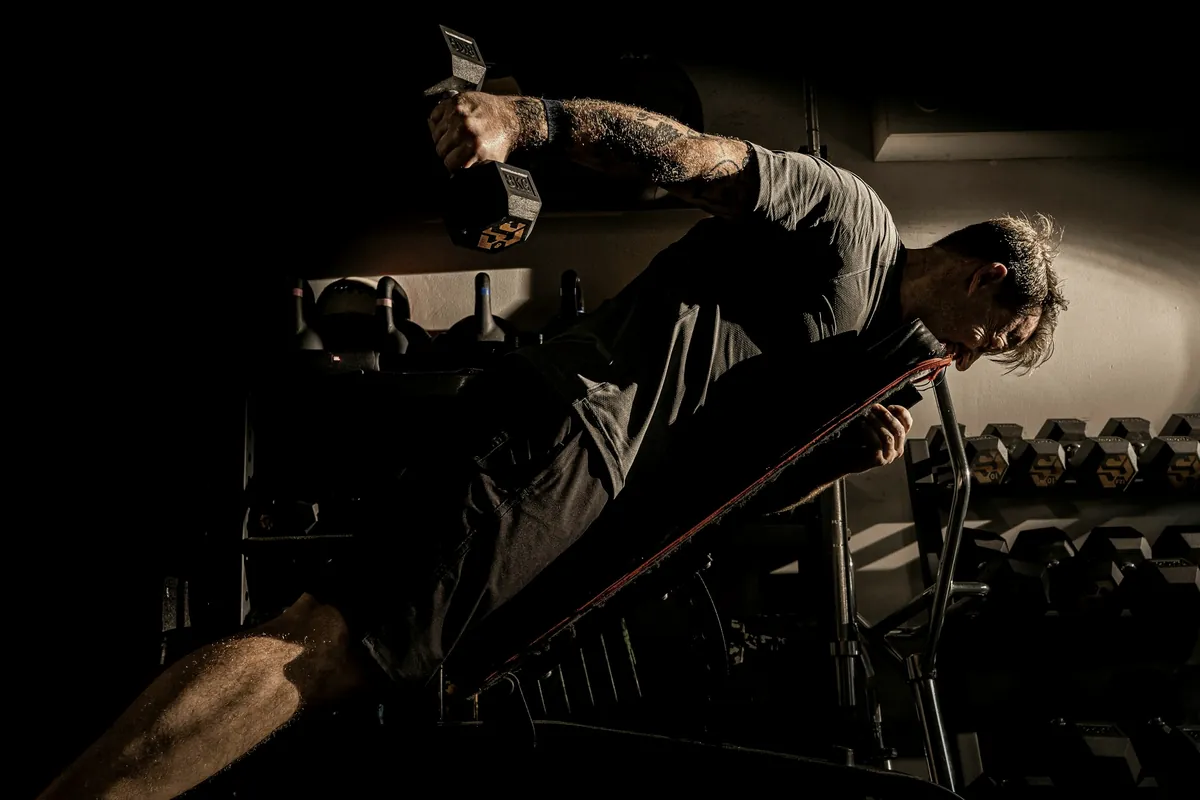
- Rows. With a band, a cable or a dumbbell. They strengthen the upper back that spends all day rounded over a keyboard.
- Hip hinge practice. Push your hips back with a soft bend in the knees and a long, flat back. This is the movement you will use to pick things up safely for the rest of your life.
- Hip flexor stretch and upper-back rotation. Gentle stretches for the front of the hips and the middle of the back, the two areas long sitting tightens most.
Start with one or two easy sets of each, move slowly, and stop well short of strain. That makes a sensible first week, though not a whole programme, and having a coach show you each movement in person and check your form matters more than the list itself.
Will lifting weights make my back worse?
Done well, it usually does the opposite. A stronger back, stronger hips and a solid trunk carry the load of daily life more easily, and learning to lift properly in the gym is exactly how you learn to lift a suitcase, a child or a gas cylinder safely at home.
“Done well” means learning the hip hinge before you deadlift, starting light, adding weight in small steps and having someone watch your technique. A barbell deadlift is not dangerous in itself; a rushed one, with a rounded back and pride in charge, can be. Our guide to strength training after 40 explains how to build that kind of patient progress, and it holds at any age.
What should I avoid while my back is sore?
Not much, and not for long. Rather than a list of banned exercises, use your back’s response as the guide. While it is sore, avoid sudden heavy lifts you have not prepared for, long stretches of sitting without a break, and anything that brings on sharp or spreading pain. You do not need hundreds of sit-ups, and you do not need to avoid bending for ever. As things settle, those movements usually come back into your training gradually, with someone watching.
Why does my back feel worse after a long drive?
Because a long drive is sitting at its most demanding: one fixed position, your feet busy on the pedals, the seat often too far back, and no chance to get up. Set the seat so your knees are slightly bent and your back is supported, and on long journeys (to Islamabad for a wedding, say), stop to walk for a few minutes every hour or two. A short walk when you arrive helps more than collapsing onto the sofa.
Should I see a physiotherapist as well as going to the gym?
If your doctor suggests it, or your pain has lasted for months, keeps returning, or follows an injury, yes. A physiotherapist can assess the problem in a way a gym coach is not there to do. The two work well together. The physiotherapist identifies what is going on and what to avoid for now; your coach turns that advice into a training plan you can follow week after week. Share what the physiotherapist tells you, so everyone is pulling in the same direction.
How long before I notice a difference?
Many people notice their back feels looser within a couple of weeks of moving more during the day. Strength takes longer; think in weeks and months. Flare-ups can still happen along the way, especially after a long drive or a week of deadlines. A flare-up does not mean you have failed. Ease back for a few days and then carry on.
I tried the gym before and hurt my back. What would be different now?
Usually, the difference is a plan built around you from the first session. Plenty of people hurt their back at the gym by copying someone else’s routine, lifting too heavy too soon, or never being shown how to brace and hinge. At Structure, every member starts the same way at every club: a coach assesses how you move, plans around your history, trains you with recovery built in, and measures how it is going.
Several coaches list back-friendly work among their specialities. At Gulberg, Faseeh ur Rehman specialises in strength, mobility and injury rehab, and Hafiz Umair helps members with joint pain train safely. Imran Afzal at Gulberg and Asad Riaz at DHA both work on posture correction, and Ali Hamza at Johar Town includes mobility in his coaching. If you are looking for posture correction in Lahore, or mobility and rehab training, the posture correction and mobility & rehab programmes exist for exactly this kind of start.
Does swimming help back pain?
Many people with back pain find swimming comfortable, because the water supports your weight while you move. It is a gentle way to stay active on days your back does not fancy the gym floor. Start with relaxed lengths in a stroke that feels easy, and if one stroke aggravates your back, switch to another. At Gulberg, the temperature-controlled pool makes this possible all year round. See the Gulberg club page for everything that is there.
Where do I start?
Start with a conversation before any heavy lifting. The free first visit at any Structure club includes meeting a coach and a body assessment, and you leave with a starting plan you keep whether or not you join. Bring clothes you can move in, clean training shoes and a water bottle, and tell the coach about your back, any old injury and anything your doctor has advised. That information is what turns a generic routine into one your back can live with.